

It’s hard to imagine that we aren’t experiencing the peak of the AI hype cycle. Nvidia, the poster child of AI enthusiasm, briefly became the largest[1] company in the world only 5 years after being outside the top 20. The numbers around Nvidia’s ascent are astounding as this spring the company added a trillion dollars in market cap (from $2tn to $3tn) in 30 days. And now, with each 1% movement in the stock, the company gains or loses the equivalent of an HP Inc, Delta Airlines, or two Expedias.
The current AI mania was born from investment, rapid advancements, and widespread optimism around the transformative potential of generative AI. The increased availability of large data sets combined with previously unthinkable processing power have led to innovations in technologies such as deep learning, natural language processing, and computer vision. Companies are racing to integrate AI into their operations, promising enhancements in efficiency, productivity, and innovation. Pundits predict that AI will become our personal assistants, therapists, accountants, lawyers, romantic interests, provide tools to upload our consciousness digitally, and even solve humanity’s most pressing problems. But wait, there’s more!
Consumer optimism for AI capabilities is unbridled. But what happens if reality never meets expectations?
Many point to the speculative “dotcom” bubble, specifically the rise and fall of Cisco, as a parallel for the current AI cycle. However, we believe the telecom boom and bust makes for a more apt comparison. The dotcom implosion received the most publicity, but it was the telecom bubble that accounted for a much larger share of market capitalization gained and lost[2]..
The telecom boom, which peaked in the late 1990s and early 2000s, was driven by similar changes driving AI today: significant capital investments, rapid technology advancements, and widespread optimism about the future. The advent of the internet, mobile technology, and fiber-optic communications created a euphoric belief that the telecom sector would grow indefinitely. Specifically, investors fell into the fallacy of Metcalfe’s Law which asserted that the more they invested, the more useful the network would become. Telecom firms bet on a radical transformation in the way people conducted business and everyday activities and extrapolated that into a stratospheric leap in demand. Startups proliferated. Companies poured billions into infrastructure and vast networks of fiber-optic cables. No single firm overspent, but the combined infusion led to overcapacity. Between 1998 and 2001, transmission capacity increased 500x from a combination of fiber-optic cable laid in the ground and technology improvements[3]. However, demand merely quadrupled and came nowhere near meeting supply. Equity valuations soared and then plummeted. And a flood of IPOs turned into a flood of bankruptcy filings.
From April 1997 to March 2000, the Nasdaq index of telecom stocks rose from 198 to 1,230, an average annual increase of 84%. The telecom boom turned and, by May of 2003, the index had reverted to 136, an average annual decrease of (-52%) from peak. The postmortem for the period is not simply that the sector was overvalued, but that the market wildly missed in forecasting.
The boom and bust in telecom coincided with the downturn in equity markets as the dotcom bubble also deflated. The telecom industry took five years to go from boom in 1997 to bust in 2002 — much faster than it took for the technology to truly change our lives.
We believe we could be setting ourselves up for a similar cycle today. Both cycles were underpinned by technological advancements that promised to revolutionize industries. Just as the internet and mobile communications were seen as game-changers in the 1990s, AI is now touted as a transformative technology that will redefine everything.
Capital chasing anything AI related seems limitless. An abundance of AI-focused startups has followed as well as companies performing every complex business contortion to somehow be associated with AI. A trend affectionately referred to as “AI washing”. Didn’t we already go through this exercise with crypto?
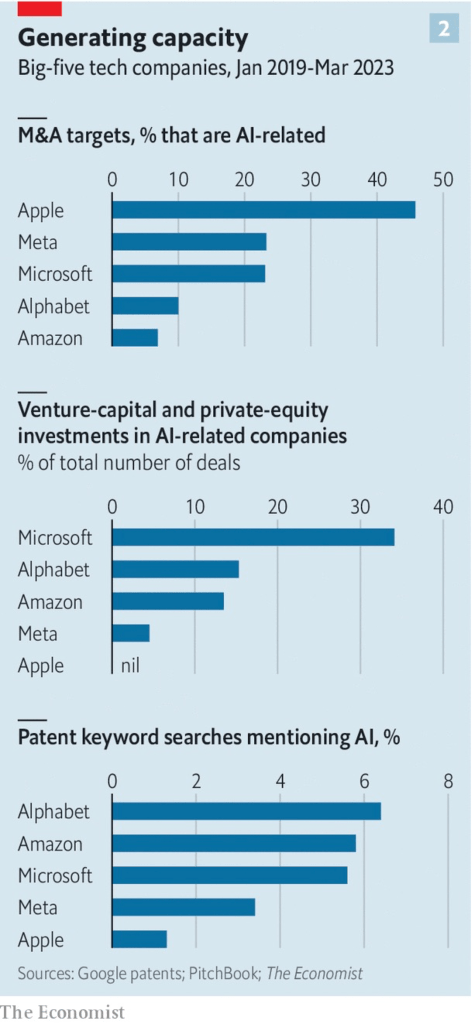
All signs point to markets repeating mistakes of the past: overinvestment in an exciting new sector while outcomes for business model, profitability, or application are unknowable. Businesses could be setting themselves up for the technology trap where consumers expect AI to be integrated into every application, but are unwilling to pay a premium.

There are critical differences that could help the AI sector avoid the boom bust cycle. The AI industry benefits from a more diversified investment landscape whereas the telecom boom was heavily concentrated on infrastructure and a few key technologies. This diversification could mitigate the risk of a simultaneous industry wide collapse. Another significant difference is the maturity of the technology. Many of the technologies promised during the telecom boom, like fiber-to-the-home, took longer to materialize than expected. In contrast, AI technologies are already demonstrating practical applications and generating revenue, from chatbots enhancing customer service to machine learning models optimizing supply chains and helping coders improve code.
However, exuberance still abounds. Large language models remain limited. Many LLMs fail basic tests. Most encounters with customer service chatbots lead to users finding the quickest path to communicate with a real human. The International Monetary Fund says AI will “transform the global economy.” President Biden says AI is “the most consequential technology of our time.” However, evolution is hard. AI continues to capture the imagination, but the technology is only 90% of the way there, the last 10% of development is where the real gains are in useability and application. If the last 10% isn’t done correctly, the product is terrible. We too, are excited about the possibilities and we are optimistic in the improvements that AI could bring to the world in the same way the internet is integral to our daily lives and in the same way that the original deregulation of the telecom industry eventually led to something as simple and magical as Facetime video delivered to your phone over high-speed bandwidth. But we also recognize that the true AI impact is unlikely to be delivered tomorrow, but more likley 10 years from now. And that has real implications on the hype cycle we are swimming in now.
[1] By market cap
[2] Boom and Bust in Telecommunications. Elise A. Couper, John P. Hejkal, and Alexander L. Wolman
[3] Inside the Telecom Crash: Bankruptcies, Fallacies and Scandals, A Closer Look at the WorldCom Case, Harmantzis
Leave a Reply