
2025 delivered another strong year for public equities. The S&P 500 returned over +17% for the third straight year, and six of the last seven. This is despite Covid, supply chain disruptions, rapid inflation, aggressive Fed rate hikes, and this year’s unexpected Liberation Day tariffs. Inflation persists, unemployment is creeping upwards, but with GDP up +4.3%[1], our economy remains remarkably resilient.
The market, however, exhibits clear characteristics of a bubble. Speculative excess is a familiar byproduct of periods of rapid technological change. Capital is deployed aggressively as companies seek to avoid being leapfrogged. Call it “rational exuberance” as late partygoers may be left out in the cold. This cycle differs materially from purely speculative episodes such as tulip mania or the more recent NFTs. The current AI-driven expansion rests on genuine technological innovation with the capacity to deliver meaningful productivity gains and long-term economic growth, reminiscent of the Internet bubble’s lasting impact despite its initial market retrenchment.
The tension between genuine productivity gains and conspicuous speculation defines the AI ecosystem. OpenAI, for example, reports that one-tenth of the world’s population now uses ChatGPT and estimates their annual revenue could reach $200 billion (nearly 10× its current run rate) by 2030. An astonishing growth trajectory, yet the company has committed to roughly $1.4 trillion in computing spend over the next eight years. Even when accounting for enterprise and API revenue, the monetization required to cover that bar tab is difficult to reconcile. Meanwhile, its largest rival, Anthropic, remains focused on a B2B enterprise model and is on track to reach profitability in 2028.
Maybe the current market bubble is better characterized as an “OpenAI Bubble.”
This cycle doesn’t have to end violently. Many of the lead actors in the AI race have great businesses and significant cash even if this AI thing doesn’t work out. Perhaps in the coming year, freemium models evolve into robust revenue models and increased ROI to support the estimated $1.6 trillion invested in AI development to date[2]. In the end, yes, companies will inevitably have overspent as is the case with every cycle. But perhaps stock prices can converge to reality without the violence of the dotcom bust.
In this race for gold, not everyone can win. So how can equity investors pick the winners and losers?
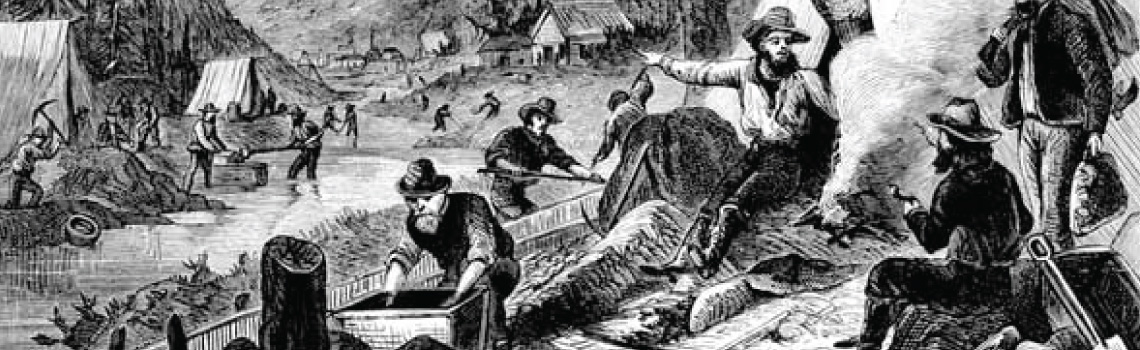
One strategy is to avoid the gold entirely and invest in the proverbial “picks and shovels”— a name given to the businesses of the San Francisco Gold Rush (1848 – 1855) that became the most successful businesses of that era. While few miners struck it rich, service providers catering to them benefited from a steady and growing customer base. These companies entered the boom with viable businesses, charged opportunistic surge prices, and reinvested profits back into their core businesses. Several went on to become large, long-lasting enterprises:
- Levi Strauss and Co – Levi Strauss arrived in San Francisco in 1853 to open a wholesale dry goods business, selling clothing, bedding, combs, wallets, and tents to the miners. Much later, he partnered with Jacob Davis, a tailor, to create durable work pants reinforced with copper rivets at points of strain (like the pockets). These were the world’s first blue jeans, which became a staple for workers and a globally recognized brand later expanded into brands such as Dockers and Denizen.
- Wells Fargo – Henry Wells and William G. Fargo founded the company in 1852 to provide banking and express services moving gold and mail via stagecoach and telegraph to fill a vital need during the chaotic period. The company eventually grew into a transcontinental network, and its express business was nationalized during WWI, leaving its core banking operations in San Francisco.
- Studebaker – Founded in 1852 in Indiana by brothers Henry and Clement Studebaker, the company manufactured durable wagons essential for westward expansion, including for the miners traveling to California. In 1853, their younger brother, John M. Studebaker, decided to travel west himself to find gold. He soon realized that the real demand was for mining tools and made his initial fortune selling wheelbarrows. He later returned home to Indiana and invested his $8,000 profit (~$300,000 in 2026 dollars) in his brothers’ growing wagon company. In the early 20th century, the brothers successfully transitioned to the automobile industry, though the company eventually dissolved.
They say gold is expensive because so many people went looking for it and didn’t find it. It is estimated that only 1% of the actual miners grew rich, and a lucky 10% earned enough to leave San Francisco with modest profits. The rest barely broke even or spent their working lives employed by the very merchants who sold them supplies.
Inflation played a huge role. A single egg in San Francisco could cost $1 ($40 today)[3] and a pair of boots could run $100 ($4,000). Miners found gold but immediately gave it back to merchants. By the time the “49ers” arrived, surface gold was gone and mining had turned into an industrial business requiring significant capital and equipment.
The same dynamics apply to today’s AI boom. We know that there will be major winners and losers, and those will be determined with time. Demand will run through many channels: infrastructure, cooling, energy, and of course, compute and foundry. Long-term success will come to those owning durable, cash-generative businesses, and usually it is the picks and shovels providers who are positioned to endure any outcome. If the music stops, these companies will still have customers, revenues, and businesses that stand on their own.
[1] Initial Q3 2025 estimate from Bureau of Economic Analysis (BEA)
Leave a Reply